Caffeinated Thoughts |

- Sarah Palin Radio with CT Contributor Michelle McCormick
- Steve King: Video Wrap Up of ObamaCare Hearings
- The Wisconsin Polls
- Branstad Encourages Iowa School Superintendents to Continue Use of Healthy, Lean Beef
- End the Farming “Entitlement”
| Sarah Palin Radio with CT Contributor Michelle McCormick Posted: 30 Mar 2012 10:10 PM PDT  Michelle McCormick in Center, Peter Singleton to left at Tea Party of American Event in Indianola, IA The Organize 4 Palin Iowa Co-Coordinator and new Caffeinated Thoughts contributor, Michelle McCormick, spoke with LaDonna Hale Curzon on Sarah Palin Radio about her experience at the Reload Retreat and thoughts on the current GOP Presidential Nomination race. Listen to internet radio with LaDonna Hale Curzon on Blog Talk Radio
Link to this post!        |
| Steve King: Video Wrap Up of ObamaCare Hearings Posted: 30 Mar 2012 09:37 PM PDT Congressman Steve King (R-IA) released the video above to conclude the week of ObamaCare hearings in the Supreme Court. Here is one quote below:
Link to this post!      |
| Posted: 30 Mar 2012 09:21 PM PDT
Rasmussen (Romney +13 and Romney +10): Rasmussen’s post-Illinois Primary poll showed an extraordinary 13 point lead for Romney. Because Rasmussen holds back its toplines for all but paying subscribers, it’s hard to judge the veracity of the sample but one blog which reprinted some of its inside the number report showed Rasmussen’s respondents had an 80% favorable rating of Mitt Romney. An extraordinary number considering that Romney’s favorables were only 68% in Illinois which is less rural and less conservative. In liberal Maryland, the rating was only 74%. This suggests that Rasmussen’s sampling of GOP Primary voters in Wisconsin could be pretty severely flawed. Marquette University(Romney +8): This survey was really not about the presidential primary, but it was added on. Only 190 Republicans took part in the poll. However, 349 ended up answering the Republican primary question. That would mean the Republcian Primary would be made up of 46% Democrats and Independents. While possible, the exit polling from 2008 doesn’t indicate that nor do any of the news stories suggest a surge of Independents and Democrats into the Republican Primary. Marist (Romney +7): Perhaps the most reliable poll so far, but that’s not saying much. Compared to the 2008 exit poll, this is off a little. Marist shows the state’s Very Conservative as 20%, when in 2008, it was 27% and could be higher thanthat this time around. Liberals made up 22% of Marist’s electorate, but only 10% of turnout in 2008. WPR/St. Nobert (Romney +5): A dubious poll. It has a small sample, no real toplines as to what demographics were included just why they voted, and a four day polling period. Romney and Santorum are statistically tied, but polls with that high a margin of error are not of much value. The State’s 2008 electorate was more than 40% rural which is significantly more than Michigan,Ohio, and Illinois. This could lead to Santorum overperforming his poll numbers and this race could be far closer than the current polls suggest. If Santorum loses the state by two or three points, I have to wonder whether voters will have decided to embrace Romney or responded to the non-stop drumbeat telling them that the race was over, thanks in part to some off-beat polls that suggested it.
Link to this post!      |
| Branstad Encourages Iowa School Superintendents to Continue Use of Healthy, Lean Beef Posted: 30 Mar 2012 09:15 PM PDT (DES MOINES) – Gov. Terry E. Branstad and Lt. Gov. Kim Reynolds are releasing a letter they sent to superintendents this afternoon, encouraging them to continue choosing lean, finely textured beef in schools as an effort to battle childhood obesity. The governor and lieutenant governor penned the letter as a response to the USDA's action allowing schools to choose whether they will continue serving this lean product in Iowa schools. Branstad and Reynolds will continue encouraging supermarkets and restaurants to offer this product as a safe, healthy choice for their consumers. You can read the letter below: Link to this post!      |
| Posted: 30 Mar 2012 02:00 PM PDT
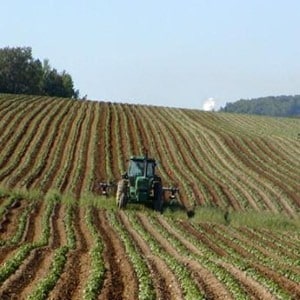
Anyone that follows the current political or financial scene is painfully aware of the financial crisis that our government is in. The Joint Super Committee on Deficit Reduction was a flop and unable to agree on the cost-saving measures that our government desperately needs. This month we are revisiting the updated numbers for farm subsidies, and after reviewing the data it is easy to see why we are in need of dramatic changes to the farm subsidy program. This website (http://farm.ewg.org) has farm subsidy data from 1995 to 2010.[1] The alarming point of the data is that this program that was started to help small, struggling farmers is now used to supplement the budgets of large farming operations. This article includes the highlights from the Website. Table One takes a look at the top ten programs in Iowa receiving subsidies from 1995 to 2010. It is no surprise that corn and soybean subsidies are the top two programs for the state of Iowa. But I believe that the disturbing fact is that the conservation reserve program is third and has paid out over $3 billion over the same time period.[2] During the time period from 1995 to 2010, the state of Iowa has received $22.3 billion in subsidies.[3] The $22.3 billion breaks down into the following categories:
The creation of the farm subsidy program was in the 1930s, with the thought that it would provide some security for production of wheat and cotton.[5] It has expanded in roles that were never thought about in the 1930s. That is the problem with entitlement programs: they grow like an evil serpent until they are so out of control no one knows what to do with them. This is why there are proposals in both the U.S. House of Representatives and the U.S. Senate that are an attempt to cut the head off this out-of-control serpent. House Budget Chairman Paul Ryan (R-WI) has proposed a reduction "in the $5-billion-a-year 'direct payment' subsidy and for reforms to control the soaring cost of federally subsidized crop insurance, the largest part of the farm safety net at nearly $9 billion a year."[6] These reforms will be able to save taxpayers about $30 billion over the next decade.[7] The plan that Ryan has proposed will reform "the fixed payments that go to farmers irrespective of price levels" and "reform the open-ended nature of the government's support for crop insurance so that agricultural producers assume the same kind of responsibility for managing risk that other businesses do."[8] Senator Chuck Grassley (R-IA) and other U.S. Senators have introduced legislation "that would set a hard cap of $250,000 in farm subsidies per married couple."[9] This legislation also "seeks to shut out people who receive payments despite having only a tenuous connection to the farmland."[10] The current farm bill expires in September of this year. The Senate legislation is hoping to "aim farm programs at smaller family farms, rather than encouraging consolidation and ever larger operations that drive up land prices and prevent a younger generation from getting into farming."[11] Grassley has been quoted as saying, "It's unacceptable that small- and medium-sized farmers get so little of the very program that was created to help them."[12] He is correct in his statement; if we look at Table Two we can see this huge imbalance of the large farmer versus the small farmer. We see that 80 percent of the commodity payments went to the top 20 percent of recipients. The top 20 percent had an average payment per recipient of $325,382 over the 1995 to 2010 time frame, whereas the remaining 80 percent of recipients received 20 percent of payments. The average payment per recipient drops dramatically to $20,006 over the same time period. The larger you are, the better the government takes care of you—not that you are more efficient or more productive, just better taken care of. So this really means that the small farms that are surviving without all the government funding are doing something right. As we look at Table Three, we see the top ten states receiving farm subsidies. When you review this table you can see that the top ten states are receiving 58 percent of the subsidies, which means the other forty states are receiving the remaining 42 percent of the farm subsidies program. The interesting fact is in Texas, the top state receiving funding from the government, only 19.4 percent of all farms receive funding from the federal government. The same issue is in California, with only 9.2 percent receiving government funding. All of sudden you should be thinking that the federal government is picking winners and losers based on this system and not encouraging the free market to work, which is what we all should want. But as long as the government is involved in the farming program, the free-market cannot work. According to the United States Department of Agriculture (USDA) data collected in the 2007 USDA Census of Agriculture, 80.7 percent of farms in Iowa collected subsidy payments.[13] We are hurting the Iowa economy by being so reliant on government funding coming into our state. The proposals we have so far are a good start, but that is all they are, a start. The government has to be forced to get out of business sectors. We have had many advancements in the area of agriculture over the time frame from the 1930s to the present, and we need to allow the farmer to excel and show the true entrepreneur spirit that they have. So please encourage House Budget Chairman Paul Ryan and Senator Chuck Grassley to see these proposed changes though and help remove the government from farming over the long term. Reprinted by permission from IOWA TRANSPARENCY NEWSLETTER, a monthly newsletter of Public Interest Institute. Link to this post!      |




| You are subscribed to email updates from Caffeinated Thoughts To stop receiving these emails, you may unsubscribe now. | Email delivery powered by Google |
| Google Inc., 20 West Kinzie, Chicago IL USA 60610 | |

Are you trying to earn money from your visitors by running popunder ads?
RăspundețiȘtergereIn case you are, did you ever use PopCash?